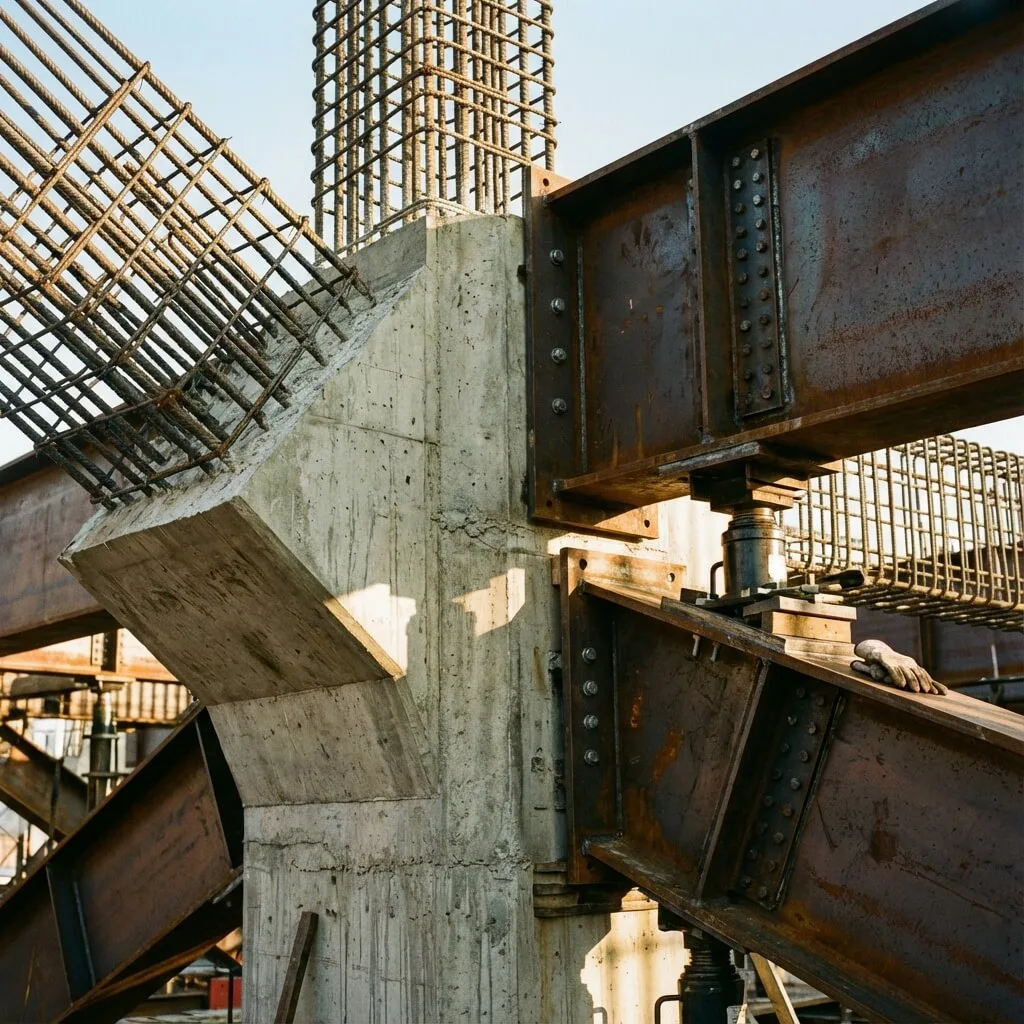
Every structure, no matter how majestic or high, ultimately transfers its load to the ground. In structural engineering, the foundation is the critical transition zone between the superstructure and the earth.
However, a foundation is only as good as the soil it rests upon. This is where Soil Bearing Capacity comes in—the key metric that dictates whether your building will stand firm for decades or suffer from structural distress and settlement.
What is Soil Bearing Capacity?
In simple terms, soil bearing capacity is the maximum load per unit area that the soil or rock can support without yielding, failing in shear, or settling excessively. It is typically expressed in Kilonewtons per square meter ($\text{kN/m}^2$) or tons per square foot.
There are three primary terms to understand:
- Ultimate Bearing Capacity ($q_u$): The intensity of loading at which the soil fails in shear.
- Safe Bearing Capacity ($q_s$): The maximum intensity of loading that the soil will carry safely without the risk of shear failure. (Calculated by dividing ultimate bearing capacity by a factor of safety, usually 2.5 to 3.0).
- Allowable Bearing Capacity ($q_a$): The maximum load intensity that can be applied to the soil without causing settlement beyond tolerable limits.
The Kolkata Context: Challenges of Deltaic Alluvium
Kolkata is situated on the lower deltaic plains of the Ganges-Brahmaputra river system. The soil profile here consists of deep alluvial deposits:
- Top Soil: Silt and clay layers with high organic content.
- Middle Layers: Medium-to-stiff clays and silts, often with low bearing strength.
- Deep Layers: Medium-to-dense sand strata, typically found at depths of 15 to 30 meters or deeper.
Because of this alluvial nature, Kolkata’s shallow soil layers often exhibit low safe bearing capacity—typically ranging from 50 to 120 $\text{kN/m}^2$. Additionally, the water table is high, which further reduces soil strength and increases the risk of settlement.
Why Shallow Foundations Often Fail for High-Rises in Kolkata
For low-rise residential structures ($G+2$ or $G+3$), shallow foundations like isolated or combined footings may suffice if the soil is properly compacted. However, for taller structures, shallow footings would exceed the safe bearing capacity, leading to:
- Differential Settlement: One side of the building settling faster than the other, causing structural cracking.
- Shear Failure: The soil beneath the footing slipping away, causing the foundation to tilt or collapse.
How We Determine Bearing Capacity
To ensure absolute safety, a comprehensive geotechnical investigation (soil test) is mandatory before any design begins. The process typically involves:
+------------------+     +--------------------+     +-------------------+
|  Field Boreholes | --> |  Standard Pen. Test| --> | Laboratory Tests  |
|  (Typically 15m+) |     |  (SPT 'N' Values)  |     | (Triaxial, Shear) |
+------------------+ +--------------------+ +-------------------+- Borehole Drilling: Boring to depths of 15m to 40m depending on the proposed building height.
- Standard Penetration Test (SPT): Measuring the resistance of soil to penetration using standard blow counts ($N$-value). Higher $N$-values indicate denser, stronger soil.
- Laboratory Testing: Testing soil samples for moisture content, plasticity index, cohesion, and angle of internal friction.
Selecting the Right Foundation
Based on the soil report, structural engineers select the most suitable foundation type:
| Structure Type | Typical Soil Quality | Recommended Foundation | Key Benefit |
|---|---|---|---|
| Low-Rise ($G+2$) | Medium/Stiff Clay | Isolated / Mat Footing | Highly economical |
| Mid-Rise ($G+5$) | Loose/Soft Clay | Raft Foundation | Distributes loads evenly over a large area |
| High-Rise ($G+10+$) | Deep Alluvium | Pile Foundation (RCC) | Transfers loads to deep, high-bearing sand strata |
The Power of Pile Foundations
In Kolkata, pile foundations are the gold standard for mid-to-high-rise projects. Bored cast-in-situ concrete piles are drilled deep into the ground until they reach the dense sand layers. The load is then transferred via skin friction along the shaft of the pile and end bearing at the pile tip.
Conclusion: Engineering Peace of Mind
Cutting corners on soil testing is one of the most dangerous decisions a developer can make. At CivilTech & Design, we treat soil investigation as a sacred step in our structural engineering workflow. By precisely calculating allowable bearing capacity and simulating soil-structure interaction, we design foundations that are perfectly optimized—neither under-designed (unsafe) nor over-designed (wastefully expensive).
Are you planning a project in Kolkata or nearby areas? Ensure your foundation is built on rock-solid data. Contact our team today for expert soil testing and structural design services.